
Scoping review on capacity strengthening of community members for health emergencies
Project details
Year: 2025
Client: Robert Koch Institute
Objectives:
The review aimed to systematically map guidance documents, tools, and training programmes available to involve or strengthen the capacity of community members to detect or respond to health emergencies.
Deliverables:
Scoping review report, its evidence tables and a scientific manuscript ready for submission describing :
- Available guidance documents, tools, and training programmes to involve or strengthen the capacity of community members to detect or respond to health emergencies
- Modalities of community engagement, including selection criteria and incentives.
- Assessment results of identified training implementations.
Performed activities
To inform the development of a training package and leverage available resources, a rapid scoping review has been conducted to systematically map guidance documents, tools and training programmes available to involve or strengthen the capacity of community members for the detection, notification and preliminary response to a health emergency. The three following research questions were informed by the review:
- Which guidance documents, tools and training programmes are available to involve and strengthen the capacity of community members to early detect or respond to a health emergency?
- What are the characteristics of community members and their engagement modalities in the identified guidance documents, tools and training programmes?
- How were identified training programmes assessed and which assessment results are available?
A detailed protocol was developed to ensure a rigorous and reproducible methodology and made available on Open Science Framework .
A two-step approach was used to search for documents of interest:
- Step 1. Initial search of the grey literature to identify published tools, guidance documents and training programmes.
- Step 2. Search of electronic bibliographic databases to retrieve assessment results of identified training programmes.
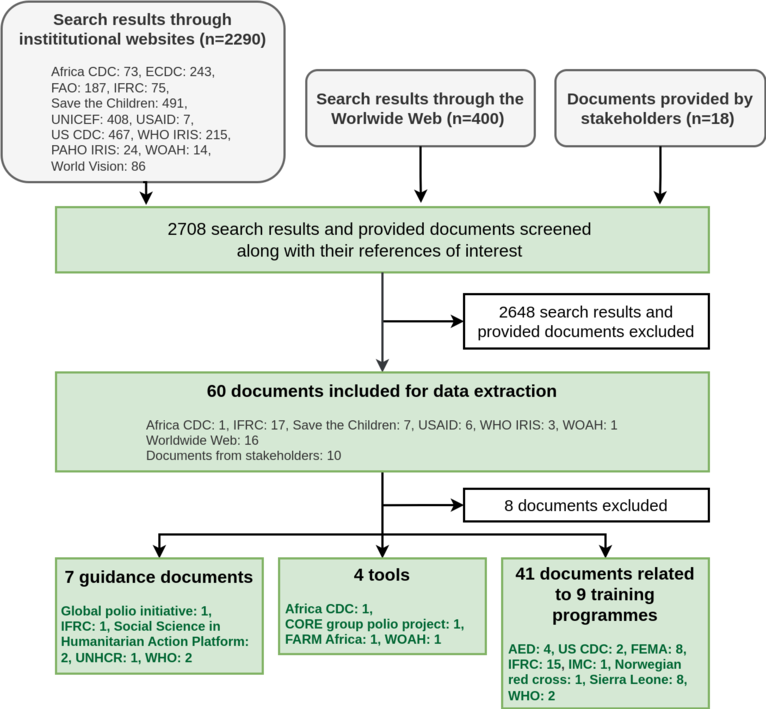
Figure 1. Search and selection of guidance documents, tools and training programmes
Fifty-two documents of interest were identified to involve or strengthen the capacity of community members to early detect or respond to health emergencies, including 38 related to six specific programmes. Content of the programme-related documents were consolidated for each programme which led to 20 published resources identified to involve or strengthen the capacity of community members. Half of these resources aimed at providing guidance to implement community-based activities and the other half on training community members for these activities. While half of the resources provided recommendations to involve community members in early detection or response, only a quarter provided practical content to do so. Recommendations and practical content to strengthen the capacities of community members were available in most of the resources, focusing primarily on providing adequate training for surveillance and first aid. Only two documents with assessment results on training programmes were retrieved. Both assessed the same programme using rudimentary methodology and providing limited results.
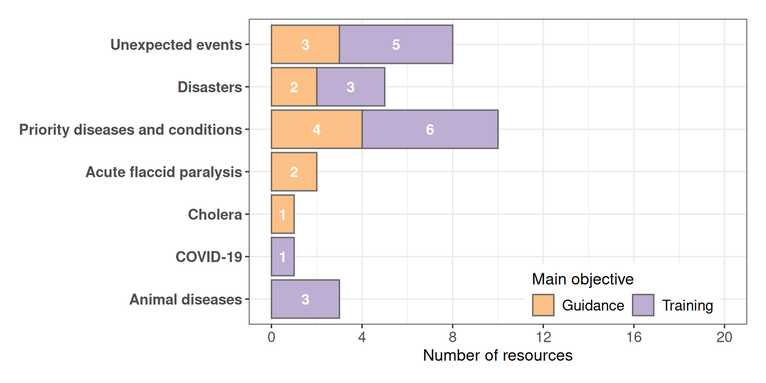
Figure 2. Distribution of the scope of identified resources by main objective
Almost all the identified resources focused on public health surveillance, involving community members in the collection and reporting of information for early detection and response. Participation of community members in response activities was mainly related to health promotion and first aid. In all but one of the resources, some community members were to be selected using specific criteria to conduct the early detection and response activities. Results from the review revealed a lack of clarity on what is expected from community-based activities and programmes.